As Amazon Associates, we earn from qualifying purchases. This means we may receive a small commission at no extra cost to you if you click through and make a purchase.
As an Amazon Associate we earn from qualifying purchases. Links on this page are affiliate links.
Back Design Explained for Buyers
When you look at headphones, the back design is a key factor. This spec refers to the construction of the ear cups. It determines how sound moves in and out. You will see two main types on listings: open-back and closed-back. Understanding this helps you choose the right pair for your needs.
An open-back design has vents or grilles on the rear of the ear cups. This allows air and sound to pass through freely. The result is a wider, more natural soundstage. Music feels less confined. However, this design lets outside noise in. It also lets your audio leak out. People nearby might hear what you listen to. This makes open-back headphones best for quiet, controlled environments like a home studio. They are not suitable for noisy commutes.
A closed-back design seals the ear cup completely. There are no vents. This blocks external noise from entering. It also prevents sound from leaking out. This isolation is helpful in loud places like offices or planes. The sound is often more focused and bass-heavy. Some listeners find the soundstage narrower compared to open-back models. But the privacy and isolation are significant benefits for many users.
How is this labeled? Listings usually state "open-back" or "closed-back" clearly. Sometimes it is listed under "acoustic design" or "ear cup type." You can often spot open-back headphones by looking at product images. Visible grilles indicate an open design. Solid plastic or metal backs indicate a closed design.
Why does this matter to you? If you prioritize accurate, spacious audio and work in a quiet room, an open-back pair may suit you. If you need to block out distractions or travel frequently, a closed-back model is the practical choice. The back design dictates where and how you can use your headphones effectively. Check this spec before you buy to ensure it matches your lifestyle.
Open-Back vs Closed-Back Designs
Open-Back
Open-back headphones feature ear cups with vents or grilles that allow air and sound to pass through. This design creates a wider, more natural soundstage. It helps you perceive instruments and vocals as coming from a broader space rather than inside your head. The Beyerdynamic DT 990 PRO and Sennheiser HD 560 S use this approach for accurate imaging. You should choose open-back if you listen in a quiet room. The trade-off is sound leakage. Others can hear your audio. External noise also enters easily. These models suit studio mixing and critical listening where isolation is not required. They often feel lighter and more breathable during long sessions.
Closed-Back
Closed-back headphones have sealed ear cups that block air and sound movement. This construction provides physical isolation from external noise. It also prevents your audio from leaking out. The Shure SRH440A and Sennheiser HD 480 PRO Plus use sealed designs for focused monitoring. You should choose closed-back if you work in noisy environments or need privacy. The trade-off is a narrower soundstage. Sound may feel more confined compared to open-back models. These headphones are ideal for studio tracking and general use where distraction-free listening matters. They often offer better passive noise reduction without active electronics.
Is Open Or Closed Back Better
Who needs it
You should prioritize back design if you value accurate sound staging above all else. Open-back headphones allow air and sound to pass through the ear cups. This creates a wider, more natural soundstage. Instruments and vocals feel like they are coming from a broader space. This is ideal for critical listening in quiet environments. You will notice better instrument separation and a less confined audio image. If you use your headphones at a desk or in a dedicated listening room, this design enhances your experience. The open construction prevents the sound from feeling trapped. It delivers a more realistic presentation. Choose this option if you want to hear the full breadth of a recording without artificial boundaries. The physical vents are key to this acoustic performance.
Who can skip it
You can ignore back design if you need isolation or portability. Closed-back headphones have solid ear cups that block external noise. This design keeps sound inside the ear cups. It is essential for commuting, traveling, or working in noisy offices. You will get better noise isolation with this build. The sealed construction prevents sound leakage, so others cannot hear your music. This is crucial for public transport or shared spaces. If you need to focus in a busy environment, closed-back is the practical choice. It also provides a more intimate soundstage. You will not get the wide spatial effect of open-back models. However, the trade-off is worth it for comfort in loud settings. Prioritize isolation over soundstage width if your environment is not controlled.
Headphone Specs Glossary
Open-Back Design
Ear cups feature vents or grilles. Sound and air pass through freely. This creates a wider, more natural soundstage. It suits quiet listening environments rather than noisy public spaces.
Closed-Back Design
Ear cups are sealed to block external noise. Sound stays inside the cup. This provides better isolation for noisy environments. It also prevents sound leakage for those around you.
Driver Size
The diameter of the speaker cone inside the ear cup. Common sizes range from forty to fifty millimeters. Larger drivers often move more air, potentially offering deeper bass response.
Bluetooth Connection
Wireless technology using radio waves. It connects headphones to phones or computers. Look for versions like 5.0 or higher. Newer versions offer better range and lower power consumption.
Active Noise Cancellation
Electronics that reduce ambient noise. Microphones pick up outside sounds. The headphones generate inverse sound waves to cancel them out. This helps you focus in loud places like planes.
Ear Cushion Fit
How the padding seals against your head. Memory foam adapts to your shape. A tight seal is crucial for closed-back isolation. Loose fit lets noise in and sound out.
Frequency Response
The range of sounds the headphones reproduce. Measured in Hertz, it usually spans twenty to twenty thousand hertz. A wider range suggests the ability to play deeper bass and higher treble.
Impedance
Electrical resistance measured in ohms. Low impedance works well with phones. High impedance often requires a dedicated amplifier. Match this spec to your source device for proper volume levels.
| # | Product | Best for | Price |
|---|---|---|---|
| 1 | Beyerdynamic DT 990 PRO 80 Ohm Headphones | critical listening and studio mixing | |
| 2 | Shure Over-Ear Wired Studio Headphones | Studio monitoring and mixing tasks | |
| 3 | Sennheiser HD 560 S Open-Back | Quiet room listening and critical audio analysis | |
| 4 | Sennheiser HD 480 PRO Plus Closed-Back Headphones | studio mixing and monitoring | |
| 5 | Sennheiser HD 599 Open-Back Headphones | home listening and critical audio evaluation | |
| 6 | Meze 99 Classics Walnut Gold | audiophiles seeking isolated, natural sound |
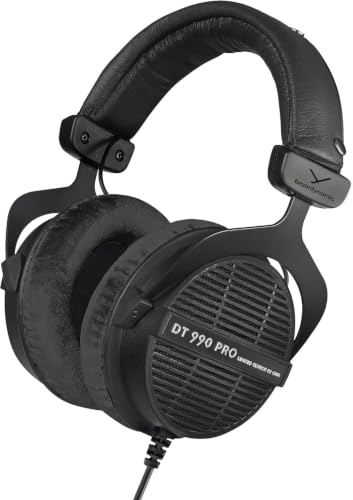
Beyerdynamic DT 990 PRO 80 Ohm Headphones
Best for: critical listening and studio mixing
- Back Design
- Open-Back
- Connectivity
- Wired, 3.5 mm
- Form Factor
- Over-Ear
- Use
- Audiophiles, Studio, Mixing, Gaming
- Color
- Black
- Dimensions
- 8.7 × 4.7 × 9.1 inches
These open-back over-ear headphones deliver a wide soundstage for critical listening. The 80-ohm impedance suits studio outputs and home audio setups. You get a 5–35,000 Hz frequency response and a 3-meter cable with a 1/4-inch adapter. The 9.5-ounce weight and replaceable ear pads support long sessions. This model is built for accurate mixing and mastering tasks.
- Open-back design provides natural spatial imaging
- 80-ohm impedance works with studio and home gear
- Extended 5–35,000 Hz frequency response
- Includes 3-meter cable and 1/4-inch adapter
- Replaceable circumaural ear pads for longevity
- 9.5-ounce weight is heavier than some competitors
- Open-back design offers less noise isolation
- 9.1-inch height requires more storage space
- You need accurate sound for mixing and mastering
- You use professional studio outputs or home audio gear
- You prefer open-back headphones for a wider soundstage
- You need closed-back headphones for noise isolation
- You require wireless connectivity for your setup
- You prefer lightweight headphones under 9 ounces
Verdict: beyerdynamic DT 990 PRO 80 Ohm Open-Back headphones suit audio professionals and audiophiles who prioritize soundstage accuracy and serviceable build quality for studio work. They are ideal for users who can manage the open-back design and 9.5-ounce weight for critical listening tasks.

Shure Over-Ear Wired Studio Headphones
Best for: Studio monitoring and mixing tasks
- Back Design
- Closed-Back
- Connectivity
- Wired
- Form Factor
- Over-Ear
- Use
- Studio, Mixing
- Color
- Black
- Dimensions
- 10 × 9.85 × 3.23 inches
The Shure SRH440A is a closed-back, over-ear wired headphone designed for studio monitoring and mixing. It features a balanced sound signature with extended frequency response for accurate audio reproduction. The lightweight build weighs 9.01 ounces, and the collapsible design aids portability. Its closed-back construction isolates sound, making it suitable for critical listening in noisy environments. You get reliable performance across various audio interfaces.
- Closed-back design reduces ambient noise
- Lightweight 9.01 ounces for all-day comfort
- Balanced, detailed sound signature
- Collapsible design for easy storage
- Detachable locking cable for durability
- Heavier than the 9.5-inch Beyerdynamic DT 990 PRO variant
- Closed-back design limits natural soundstage width compared to open-back models
- Wired connection restricts movement compared to wireless options
- You need accurate monitoring for recording or mixing
- You prefer a closed-back design for noise isolation
- You want a wired connection for reliable studio use
- You require wireless freedom for mobile use
- You prefer an open-back design for a wider soundstage
- You need active noise cancellation technology
Verdict: Shure SRH440A Closed-Back Studio Headphones fit professionals who need accurate, isolated monitoring in a wired studio environment. You should choose these if you prioritize sound accuracy and durability over wireless convenience.

Sennheiser HD 560 S Open-Back
Best for: Quiet room listening and critical audio analysis
- Back Design
- Open-Back
- Connectivity
- 3.5 mm, 6.3 mm
- Form Factor
- Over-The-Ear
- Features
- Detachable Cable
- Use
- Audiophiles
- Color
- Black
The Sennheiser HD 560 S uses open-back earcups to let sound waves expand naturally, creating a wide soundstage. E.A.R. technology tilts drivers to match the angle of your ears for lifelike depth. It features a neutral frequency response and extended low-end reach. The black over-ear design weighs 8.48 ounces. It includes a detachable cable with a 6.3mm jack that adapts to 3.5mm inputs for studio or home use.
- Open-back design expands sound waves naturally
- E.A.R. technology tilts drivers for ergonomic fit
- Neutral frequency response reveals detail in music
- Detachable cable with 6.3mm and 3.5mm compatibility
- Open-back design offers no passive noise isolation
- 8.48 ounces weight is heavier than some competitors
- You want a neutral, accurate reference sound
- You listen in a quiet, controlled environment
- You prefer wide soundstage and depth
- You need active noise cancellation
- You require isolation from background noise
- You want lightweight portable headphones
Verdict: The Sennheiser HD 560 S Open-Back Audiophile Headphones suits listeners who prioritize accuracy and soundstage in a quiet space. Its open-back design and neutral tuning make it ideal for critical listening rather than noisy commutes.

Sennheiser HD 480 PRO Plus Closed-Back Headphones
Best for: studio mixing and monitoring
- Back Design
- Closed-Back
- Noise Control
- Multi-stage passive shielding
- Connectivity
- Detachable cable, dual L/R jacks
- Use
- Studio
- Color
- Black
- Dimensions
- 7.48 × 7.09 × 3.74 inches
The Sennheiser HD 480 PRO features closed-back design with precision German engineering and neodymium drivers. Its weight is 1.1 pounds, and dimensions are 7.09 x 3.74 x 7.48 inches. The Vibration Attenuation System reduces distortion. You get studio-ready versatility with dual L/R jacks. This model suits mixing and monitoring tasks where isolation matters.
- Closed-back design with multi-stage passive shielding
- Neodymium drivers for accurate full-spectrum sound
- Detachable cable for easy replacement
- Angled earcups for all-day comfort
- 1.1 pounds weight is heavier than lighter open-back competitors
- Closed-back construction limits the natural soundstage of open designs
- You need isolation for studio mixing
- You prefer closed-back noise control
- You want detachable cable flexibility
- You prioritize lightweight portability
- You prefer open-back soundstage
- You need wireless connectivity
Verdict: Sennheiser HD 480 PRO Closed-Back delivers precise studio monitoring with solid isolation. It fits producers who value sound accuracy over open-air spaciousness.

Sennheiser HD 599 Open-Back Headphones
Best for: home listening and critical audio evaluation
- Back Design
- Open-Back
- Connectivity
- Wired
- Form Factor
- around-ear
- Use
- Audiophiles
- Dimensions
- 8.1 × 3.95 × 10.3 inches
- Weight
- 1.56 pounds
The Sennheiser HD 599 is an open-back wired headphone designed for audiophiles. It features aluminum voice coils for high efficiency and low distortion. The build includes a padded headband and velour ear pads for comfort during long sessions. You get a 3-meter detachable cable with a 6.3mm jack and a 1.2-meter cable with a 3.5mm jack. The ivory color and matte finish give it a timeless look.
- Open-back design for natural soundstage
- Velour ear pads for pressure-free comfort
- Aluminum voice coils reduce distortion
- Includes two detachable cables
- Heavier at 1.56 pounds compared to lighter studio options
- Wired connection limits mobility
- Larger dimensions may not fit small head sizes
- You prioritize soundstage width over isolation
- You listen for extended periods in quiet spaces
- You prefer natural velour padding over synthetic leather
- You need wireless connectivity for commuting
- You require active noise cancellation
- You want a lightweight travel-friendly design
Verdict: Sennheiser HD 599 Open-Back Audiophile Headphones suit listeners who value spacious audio imaging and long-term comfort in a stationary setting. They are ideal for home listening where sound quality outweighs portability needs.
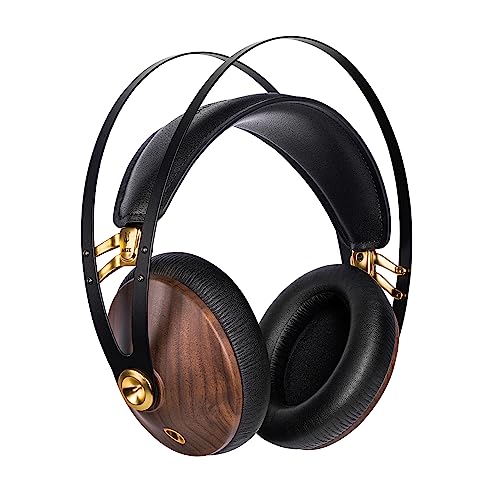
Meze 99 Classics Walnut Gold
Best for: audiophiles seeking isolated, natural sound
- Back Design
- Closed-Back
- Connectivity
- Wired
- Form Factor
- Over-Ear
- Features
- Microphone
- Use
- Audiophiles, Gaming, Work
- Dimensions
- 9.45 × 8.67 × 4.33 inches
The MEZE Audio 99 Classics features closed-back ear cups crafted from genuine walnut wood. This design isolates sound and reduces external noise. With a 32 Ohm impedance, they are power efficient and work with most devices without needing an amplifier. The over-ear fit uses a self-adjusting headband for comfort during long sessions. You get detachable Kevlar cables and a microphone for calls. These headphones suit audiophiles, gamers, and podcast listeners who value natural sound and durable, replaceable components.
- Closed-back design for sound isolation
- 32 Ohm impedance for easy driving
- Genuine walnut wood ear cups
- Self-adjusting manganese steel headband
- Replaceable components and detachable cables
- Heavier at 9.2 ounces compared to lighter competitors
- Wired connection limits mobility
- Closed-back design reduces natural soundstage width
- You prefer the unique look and feel of wood ear cups
- You need a closed-back design for noise isolation
- You want headphones with replaceable parts for longevity
- You require wireless Bluetooth connectivity
- You need a lightweight option under 8 ounces
- You prefer an open-back design for a wider soundstage
Verdict: MEZE Audio 99 Classics Walnut Wood Headphones suit listeners who prioritize sound isolation and durable, replaceable construction over wireless freedom. They are ideal for those who appreciate natural wood aesthetics and easy-to-drive impedance.
Specifications side by side
| Spec | Beyerdynamic DT 990 PRO 80 Ohm Headphones | Shure Over-Ear Wired Studio Headphones | Sennheiser HD 560 S Open-Back | Sennheiser HD 480 PRO Plus Closed-Back Headphones | Sennheiser HD 599 Open-Back Headphones | Meze 99 Classics Walnut Gold |
|---|---|---|---|---|---|---|
| Noise Control | – | – | – | Multi-stage passive shielding | – | – |
| Connectivity | Wired, 3.5 mm | Wired | 3.5 mm, 6.3 mm | Detachable cable, dual L/R jacks | Wired | Wired |
| Form Factor | Over-Ear | Over-Ear | Over-The-Ear | – | around-ear | Over-Ear |
| Back Design | Open-Back | Closed-Back | Open-Back | Closed-Back | Open-Back | Closed-Back |
| Connection | Wired | Wired | – | – | Wired | Wired |
| Fit | Over-Ear | Over-Ear | Over-Ear | – | – | Over-Ear |
| Features | – | – | Detachable Cable | – | – | Microphone |
| Use | Audiophiles, Studio, Mixing, Gaming | Studio, Mixing | Audiophiles | Studio | Audiophiles | Audiophiles, Gaming, Work |
| Color | Black | Black | Black | Black | Ivory | Gold |
| Dimensions | 8.7 × 4.7 × 9.1 inches | 10 × 9.85 × 3.23 inches | 6.06 × 3.07 × 5.67 inches | 7.48 × 7.09 × 3.74 inches | 8.1 × 3.95 × 10.3 inches | 9.45 × 8.67 × 4.33 inches |
| Weight | 9.5 ounces | 9.01 ounces | 8.48 ounces | 1.1 pounds | 1.56 pounds | 9.2 ounces |
| Size | 80 OHM | One Size | size | – | Normal | one size fits-all |
| Model | DT 990 PRO-cr | SRH440A | 615104356146 | 700500 | 506831 | M99C-WG |
Frequently asked questions
Does an open-back design block outside noise?
No. Open-back headphones have vents or grilles that let air and sound pass through. This means external noise enters easily. They are not suitable for noisy environments. You should choose closed-back models if you need isolation from your surroundings.
Which headphones offer the best soundstage?
Open-back designs typically provide the widest soundstage. The Beyerdynamic DT 990 PRO and Sennheiser HD 560 S are open-back models. They allow sound to escape, creating a more natural spatial image. This suits critical listening in quiet rooms rather than public spaces.
Are closed-back headphones better for studio work?
Yes, for isolation. Closed-back models like the Shure SRH440A and Sennheiser HD 480 PRO seal the ear cups. This blocks external noise and prevents sound leakage. They are ideal for studio monitoring where accurate, isolated listening is required without distractions.
Can I use open-back headphones in public?
It is not recommended. Open-back designs, such as the Sennheiser HD 599, let sound escape and external noise in. You will disturb others, and you will hear background noise. These headphones are best for stationary home listening where privacy and quiet are guaranteed.
Do open-back headphones leak sound to others?
Yes. Because the ear cups are vented, sound travels outward. Listeners nearby may hear your audio. Models like the Beyerdynamic DT 990 PRO are designed for personal use. You should only use them in private spaces to avoid disturbing people around you.
Which design is lighter for long sessions?
Open-back models often weigh less. The Sennheiser HD 560 S weighs 8.48 ounces. The Beyerdynamic DT 990 PRO is 9.5 ounces. Closed-back options like the Sennheiser HD 480 PRO Plus weigh 1.1 pounds. Lighter weight can improve comfort during extended listening periods.
Is a closed-back design good for gaming?
Yes, for immersion. The MEZE 99 Classics are closed-back and include a microphone. The sealed design provides isolation, helping you focus on game audio. It blocks room noise, allowing you to hear directional cues clearly without external distractions interfering with your experience.
Do I need an amplifier for open-back headphones?
It depends on the impedance. The Beyerdynamic DT 990 PRO has an 80 Ohm impedance. Higher impedance may require more power to drive. Other models like the Sennheiser HD 599 have normal impedance. Check the specs to see if your source device provides sufficient power.