As Amazon Associates, we earn from qualifying purchases. This means we may receive a small commission at no extra cost to you if you click through and make a purchase.
As an Amazon Associate we earn from qualifying purchases. Links on this page are affiliate links.
Finding the best studio headphones under $150 requires looking at specific technical data. We compared 8 products based strictly on the specifications published on their listings. The top pick is the Xvive U45RX Wireless IEM Receiver. It leads because it provides a stable 5.8 GHz link for musicians needing a dedicated wireless receiver. This frequency choice minimizes interference during critical studio sessions. You need gear that matches your exact workflow. This guide helps you decide which model fits your monitoring needs.
Choose wired for zero latency
Most picks here use wireless systems operating at 5.8 GHz or UHF frequencies. These setups prioritize mobility but introduce potential signal variables. If you need zero-latency monitoring for mixing or critical recording, select a wired option like the Beyerdynamic DT 270 Pro. Its closed-back design ensures isolation without relying on wireless transmission.
| # | Product | Best for | Price |
|---|---|---|---|
| 1 | Xvive U45RX Wireless IEM Receiver Best overall | musicians needing a dedicated wireless receiver | |
| 2 | Xvive U45R Wireless In-Ear Monitor Receiver Best premium | musicians needing stable wireless monitoring | |
| 3 | BASN BmasterX 6-Driver IEM Best detachable cable | detailed hybrid driver monitoring | |
| 4 | beyerdynamic DT 270 Pro Closed-Back Best budget | home recording and podcast monitoring | |
| 5 | Phenyx Pro Mono Wireless IEM System Also great | mono monitoring in live settings | |
| 6 | MICNAUX SEM400 Mono IEM System Also great | Small group mono stage monitoring | |
| 7 | BASN Bmaster5 Hybrid Driver IEM Best audiophiles | Audiophiles needing hybrid driver clarity | |
| 8 | Mackie MP-120BTA Bluetooth In-Ear Monitors Best bluetooth | musicians needing wireless stage monitoring |
The best fit for you
- You need a dedicated wireless receiver for studio work – Xvive U45RX Wireless IEM Receiver – It uses a stable 5.8 GHz link to prevent interference during recording.
- You want zero-latency wired monitoring for home recording – beyerdynamic DT 270 Pro Closed-Back – The closed-back design and wired connection ensure isolation without wireless delay.
- You require detachable cables for detailed hybrid driver use – BASN BmasterX 6-Driver IEM – It features a 4.4mm balanced connection and detachable cable for flexible studio monitoring.
- You need stable mono monitoring for live performance – Phenyx Pro Mono Wireless IEM System – This system delivers stable mono audio with a focus on signal range.
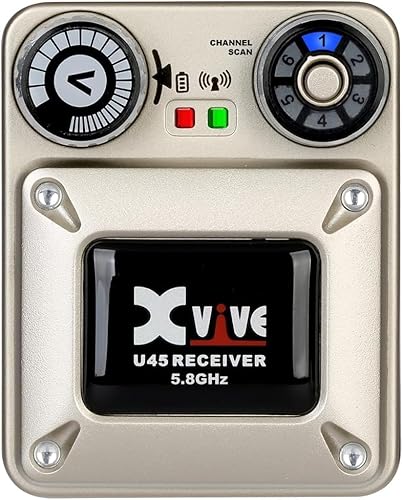
Xvive U45RX Wireless IEM Receiver
Best for: musicians needing a dedicated wireless receiver
- Form Factor
- In-Ear Monitor
- Connection Type
- 5.8 GHz
- Features
- Wireless System
- Use
- Studio, Musicians
- Dimensions
- 3.8 × 3 × 3 inches
- Weight
- 7.83 ounces
This is the receiver-only unit for the Xvive U45 in-ear monitor system. It uses a 5.8 GHz wireless connection with a 100 ft range. The audio supports 24-bit/48kHz resolution and a 20Hz to 20kHz frequency response. You get up to 5 hours of battery life. It fits musicians who need a reliable wireless link for studio or stage use.
- 5.8 GHz true diversity wireless connection
- 100 ft / 30.5 m operating distance
- 24-bit/48kHz high-resolution audio support
- Channel Scan Mode for interference avoidance
- USB-C charging with 10-minute quick charge
- Receiver-only design requires separate transmitter
- 5-hour battery life is limited for long sessions
- 7.83 oz weight is heavier than typical IEMs
- You need a dedicated receiver for a wireless IEM system
- You perform in environments with wireless interference
- You require a 5.8 GHz connection for stability
- You want a complete in-ear monitor system with earpieces
- You need wired headphones for zero-latency monitoring
- You prefer lightweight earbuds for extended wear
Verdict: Xvive U45RX Wireless IEM Receiver provides a stable 5.8 GHz link for musicians needing a dedicated receiver. It suits performers who prioritize interference-free wireless audio over all-in-one convenience.

Xvive U45R Wireless In-Ear Monitor Receiver
Best for: musicians needing stable wireless monitoring
- Form Factor
- In-Ear Monitor
- Connection Type
- 5.8 GHz Wireless
- Features
- Wireless System
- Use
- Studio, Musicians
- Color
- Black
The Xvive U45R is a wireless receiver for in-ear monitor systems. It uses a 5.8GHz frequency to reduce interference and maintain a stable connection. The device offers a 100ft range and less than 5ms latency for near-instantaneous audio. It includes auto channel scanning to select the best frequency. This receiver suits musicians and studio users who need reliable wireless monitoring with up to 5 hours of battery life.
- 5.8GHz wireless frequency for reduced interference
- 100ft wireless range for freedom of movement
- Less than 5ms latency for seamless monitoring
- Auto channel scan for stable connections
- 5 hours of battery life limits continuous use
- Receiver only unit requires a separate transmitter
- You need a stable wireless connection for live performances
- You require low latency for accurate monitoring
- You are a musician using in-ear monitors
- You need a wired connection for zero latency
- You want a complete system without buying extra parts
- You require all-day battery life beyond 5 hours
Verdict: Xvive U45R Wireless In-Ear Monitor Receiver provides stable 5.8GHz connectivity for musicians. It fits performers who need reliable wireless monitoring with minimal latency.

BASN BmasterX 6-Driver IEM
Best for: detailed hybrid driver monitoring
- Form Factor
- In-Ear Monitor
- Connection Type
- Wired
- Driver Type
- Hybrid
- Noise Control
- Noise Isolation
- Detachable Cable
- Detachable
- Features
- Detachable Cable, 4.4mm Balanced
The BASN BmasterX is a wired in-ear monitor featuring a hybrid driver array with one dynamic driver, three balanced armatures, and two piezoelectric tweeters. It includes a detachable silver-plated OFC cable with interchangeable 3.5mm and 4.4mm plugs. The resin housing and aluminum plate provide a lightweight build for studio monitoring. You get seven fit tips for comfort. This setup suits musicians needing detailed sound separation.
- Hybrid 6-driver configuration for detailed highs and mids
- Detachable silver-plated OFC cable for durability
- Supports 3.5mm and 4.4mm balanced plugs
- Lightweight resin and aluminum housing design
- Heavier at 8.47 ounces compared to single-driver competitors
- Larger dimensions with a 6.89-inch length
- Wired connection limits wireless mobility
- You need detailed mid-range and high-frequency separation
- You prefer balanced 4.4mm connectivity
- You want a detachable cable for easy replacement
- You require wireless Bluetooth connectivity
- You prefer a single dynamic driver design
- You need a significantly lighter unit
Verdict: The BASN BmasterX Wired IEM offers a complex hybrid driver setup for precise studio monitoring. It fits musicians who value cable flexibility and detailed sound reproduction over wireless convenience.

beyerdynamic DT 270 Pro Closed-Back
Best for: home recording and podcast monitoring
- Back Design
- Closed-Back
- Connection Type
- Wired
- Use
- Studio, Mixing
- Color
- Black
- Dimensions
- 7.87 × 7.09 × 19.7 inches
- Weight
- 6.8 ounces
The Beyerdynamic DT 270 Pro are closed-back wired studio headphones designed for home recording and podcast monitoring. They offer zero-latency audio through a direct wired connection to interfaces or laptops. The closed-back design provides isolation, keeping click tracks out of your microphone. Weighing 6.8 ounces, they feature soft grey ear pads for comfortable, long-session use. This model suits users prioritizing isolation and comfort over wireless convenience.
- Closed-back design isolates sound to prevent bleed into microphones
- Wired connection ensures zero-latency monitoring for recording sessions
- Lightweight 6.8-ounce build with soft ear pads for comfort
- Specifically tuned for studio mixing and home recording tasks
- Wired connection limits mobility compared to wireless alternatives on this list
- Single 3-meter cable length restricts movement range during sessions
- Closed-back design may cause ear fatigue for some users during extended wear
- You need reliable isolation to keep click tracks out of your recording microphone
- You prefer a wired connection to avoid any audio latency during monitoring
- You require lightweight headphones for comfortable, long-duration studio sessions
- You need wireless freedom to move around your recording space
- You prefer open-back headphones for a more natural soundstage
- You want headphones with a longer cable or included wireless adapter
Verdict: Beyerdynamic DT 270 Pro Wired Headphones fit home recorders who prioritize isolation and zero-latency monitoring. They are a practical choice for podcasters needing comfortable, wired studio headphones.

Phenyx Pro Mono Wireless IEM System
Best for: mono monitoring in live settings
- Form Factor
- In-Ear Monitor
- Connection Type
- UHF, Wireless
- Features
- Wireless System
- Use
- Studio, Musicians
- Color
- Black
- Ear Style
- Mono
This mono wireless in-ear monitor system uses a UHF 900MHz band to deliver audio without latency. It includes one bodypack receiver and one transmitter, supporting up to 50 selectable frequencies. The system allows up to five units to work together within a 164 ft operating range. You get clear, focused sound that eliminates phase issues. It suits musicians, church pastors, and broadcasters who need reliable monitoring on stage or in the studio.
- UHF 900MHz wireless band ensures zero latency
- 50 selectable frequencies prevent signal interference
- Supports up to 5 IEM systems working simultaneously
- 164 ft operating range for free movement
- Mono monitoring eliminates phase distortion
- Mono audio output limits stereo separation
- 4.41 pounds total system weight is heavy
- 14 inches height requires rack or case space
- You need a mono monitoring solution
- You perform in environments with many wireless signals
- You require a 164 ft operating range
- You require stereo audio separation
- You prefer lightweight portable gear
- You need a compact single-unit design
Verdict: Phenyx Pro Mono Wireless IEM System delivers stable mono monitoring for live performance. It fits musicians and broadcasters who prioritize signal stability and range over stereo imaging.

MICNAUX SEM400 Mono IEM System
Best for: Small group mono stage monitoring
- Form Factor
- In-Ear Monitor
- Connection Type
- UHF
- Features
- Wireless System
- Use
- Studio, Musicians
- Color
- Black
- Ear Style
- Mono
This MICNAUX SEM400 is a mono wireless in-ear monitor system designed for musicians and studio use. It operates on a UHF band with a 520–580 MHz frequency range, offering a transmission distance of up to 330 feet. The package includes four bodypack receivers and earphones, making it suitable for small groups. It features an LCD display for monitoring RF signal strength and battery status, ensuring reliable performance during live sessions or rehearsals.
- UHF band with 520–580 MHz frequency range
- 330 feet transmission distance in open areas
- Includes 4 bodypack receivers and earphones
- LCD display shows RF signal and battery status
- IR sync for one-touch pairing
- Mono ear style limits stereo monitoring
- Only 4 bodypacks included in this size option
- ABS plastic receivers may feel less durable than metal
- You need a mono monitoring solution for a small group
- You require a wide transmission range for stage freedom
- You want quick setup with IR sync technology
- You need stereo sound for precise mixing
- You require more than 4 simultaneous users
- You prefer metal construction for all components
Verdict: MICNAUX SEM400 Mono IEM System provides reliable UHF monitoring for small groups. It fits musicians who need mono audio and a 330-foot range.

BASN Bmaster5 Hybrid Driver IEM
Best for: Audiophiles needing hybrid driver clarity
- Form Factor
- In-Ear Monitor
- Driver Type
- Hybrid
- Noise Control
- Noise Isolation
- Detachable Cable
- Detachable
- Use
- Audiophiles, Studio, Musicians
- Dimensions
- 8.5 × 5.5 × 2 inches
The BASN Bmaster5 uses a hybrid driver setup with one 10mm DLC dynamic driver and four balanced armature drivers. This configuration targets audiophiles and musicians who need clear mids and brilliant trebles. The in-ear monitor design provides noise isolation for studio or live use. It includes detachable cables and 12 sizes of ear tips for a secure fit. The aluminum case stores accessories for transport.
- Hybrid design with 10mm DLC and 4BA drivers
- PE connectors reduce contact resistance
- 12 sizes of silicone and memory foam tips
- Detachable 4-core OFC and mic cables
- Aluminum carrying case included
- 15.9 ounces is heavy for in-ear monitors
- 5.5 inches width is bulky for portable use
- 8.5 inches length requires significant storage space
- You need hybrid driver clarity for studio work
- You want detachable cables for easy replacement
- You require noise isolation for live monitoring
- You prefer lightweight wireless earbuds
- You need Bluetooth connectivity
- You want a compact travel-only size
Verdict: BASN Bmaster5 Hybrid Driver IEM suits audiophiles needing hybrid driver clarity and detachable cables. It fits musicians who prioritize noise isolation and stable connections over portability.

Mackie MP-120BTA Bluetooth In-Ear Monitors
Best for: musicians needing wireless stage monitoring
- Form Factor
- In-Ear Monitor
- Connection Type
- Bluetooth
- Driver Type
- Dynamic
- Noise Control
- Sound Isolation
- Detachable Cable
- Detachable
- Use
- Musicians
The Mackie MP-120BTA is a single driver in-ear monitor designed for musicians who need wireless convenience. It includes a Bluetooth adapter for wireless audio streaming. The unit features a detachable MMCX connector and a shielded braided cable for durability. Weighing just 1.12 ounces, it offers a low-profile enclosure for comfort. This setup suits performers prioritizing mobility and reliable connection over multi-driver complexity.
- Includes Bluetooth adapter for wireless connectivity
- Detachable MMCX connector for easy cable replacement
- Shielded braided cable for added durability
- Lightweight 1.12 ounce build for comfort
- Single driver configuration limits sound separation compared to multi-driver models
- Heavier than standard wired IEMs due to the included Bluetooth adapter
- You need wireless monitoring for stage performances
- You prefer a simple single driver sound signature
- You want a durable braided cable setup
- You require high-fidelity multi-driver audio separation
- You need ultra-lightweight wired in-ear monitors
- You prefer integrated Bluetooth without an adapter
Verdict: Mackie MP-120BTA Single Driver IEM is a practical wireless solution for musicians who value mobility. It fits performers who need reliable Bluetooth monitoring without the bulk of complex multi-driver systems.
Specifications side by side
| Spec | Xvive U45RX Wireless IEM Receiver | Xvive U45R Wireless In-Ear Monitor Receiver | BASN BmasterX 6-Driver IEM | beyerdynamic DT 270 Pro Closed-Back | Phenyx Pro Mono Wireless IEM System | MICNAUX SEM400 Mono IEM System | BASN Bmaster5 Hybrid Driver IEM | Mackie MP-120BTA Bluetooth In-Ear Monitors |
|---|---|---|---|---|---|---|---|---|
| Form Factor | In-Ear Monitor | In-Ear Monitor | In-Ear Monitor | – | In-Ear Monitor | In-Ear Monitor | In-Ear Monitor | In-Ear Monitor |
| Back Design | – | – | – | Closed-Back | – | – | – | – |
| Connection Type | 5.8 GHz | 5.8 GHz Wireless | Wired | Wired | UHF, Wireless | UHF | – | Bluetooth |
| Driver Type | – | – | Hybrid | – | – | – | Hybrid | Dynamic |
| Noise Control | – | – | Noise Isolation | – | – | – | Noise Isolation | Sound Isolation |
| Detachable Cable | – | – | Detachable | – | – | – | Detachable | Detachable |
| Connection | Wireless | Wireless | Wired | Wired | Wireless | Wireless | – | Wireless |
| Features | Wireless System | Wireless System | Detachable Cable, 4.4mm Balanced | – | Wireless System | Wireless System | – | Bluetooth |
| Use | Studio, Musicians | Studio, Musicians | Studio | Studio, Mixing | Studio, Musicians | Studio, Musicians | Audiophiles, Studio, Musicians | Musicians |
| Drivers | – | – | – | – | – | – | – | Single Driver |
| Color | U45RX | Black | Elegant Blue&White | Black | Black | Black | Starlight Gold | Black |
| Type | In-Ear Monitor | In-Ear Monitor | – | – | In-Ear Monitor | In-Ear Monitor | In-Ear Monitor | In-Ear Monitor |
| Ear Style | – | – | – | – | Mono | Mono | – | – |
| Dimensions | 3.8 × 3 × 3 inches | – | 6.89 × 4.92 × 1.97 inches | 7.87 × 7.09 × 19.7 inches | 12.7 × 3.35 × 14 inches | 18.9 × 3.85 × 1.9 inches | 8.5 × 5.5 × 2 inches | 3 × 4 × 1.5 inches |
| Weight | 7.83 ounces | – | 8.47 ounces | 6.8 ounces | 4.41 pounds | – | 15.9 ounces | 1.12 ounces |
| Model | U45RX | U45,PT624046 | BmasterX | 1002202 | PTM-11 | SEM400 | B5 | MP-220 |
| Size | – | U45R | Universal | – | 1 receiver +1 transmitter | 4 bodypack | Universal | Single Driver |
If you prefer casual listening over flat studio monitoring, compare the best headphones under 150 for daily use.
How to choose the right one
Check the connection type
Decide between wired and wireless based on your workflow. Wired connections like those on the Beyerdynamic DT 270 Pro offer zero-latency monitoring, which is critical for precise mixing and recording. Wireless options such as the Xvive U45RX use 5.8 GHz links to reduce cable clutter on stage. You must weigh the freedom of mobility against the potential for signal interference. Select wired for studio precision and wireless for live performance flexibility.
Evaluate driver configuration
Driver type significantly impacts sound reproduction in a studio setting. Hybrid driver setups, found in the BASN BmasterX, combine different technologies for detailed clarity. Single driver models like the Mackie MP-120BTA provide a simpler, more mobile solution. You should choose hybrid drivers if you need nuanced sound analysis for critical listening. Opt for single drivers if you prioritize ease of use and portability over complex audio fidelity.
Consider ear style and fit
Your monitoring needs dictate the ear style you require. Mono in-ear monitors, such as the Phenyx Pro PTM-11, are designed for live settings where signal stability is key. Universal fit models like the BASN Bmaster5 ensure compatibility with various ear shapes. You should select mono systems for group stage monitoring. Choose universal fits for personal studio work where consistent noise isolation and comfort are essential for long sessions.
Review physical dimensions
Physical size affects portability and storage. The Xvive U45RX measures 3 by 3 by 3.8 inches, making it compact for travel. Larger systems like the MICNAUX SEM400 include multiple bodypacks and transmitters, requiring more space. You should check the weight and dimensions if you carry gear frequently. Smaller receivers fit easily in bags, while larger multi-unit systems are better suited for fixed studio installations or dedicated stage setups.
Assess feature requirements
Specific features define the utility of each system. Detachable cables, available on the BASN BmasterX, allow for easy replacement and balanced connections via 4.4mm ports. Bluetooth connectivity, seen in the Mackie MP-120BTA, offers wireless convenience without additional transmitters. You should prioritize detachable cables if you need long-term durability and high-quality audio links. Choose Bluetooth features if you want a simple, integrated solution for mobile monitoring tasks.
Frequently asked questions
Are these studio headphones wired or wireless?
The selection includes both wired and wireless options. The Beyerdynamic DT 270 Pro uses a wired connection for zero-latency monitoring. Most other picks, like the Xvive U45RX, are wireless systems. Wireless models often use 5.8 GHz or UHF frequencies for stable transmission.
Do these headphones use in-ear monitors or over-ear designs?
Most items on this list are in-ear monitors (IEMs). The BASN BmasterX and Mackie MP-120BTA are examples of in-ear designs. The Beyerdynamic DT 270 Pro is a closed-back over-ear headphone. In-ear monitors typically offer better noise isolation for stage use.
Which option is best for home recording?
The Beyerdynamic DT 270 Pro is best for home recording. Its closed-back design provides isolation, and the wired connection ensures zero-latency monitoring. This makes it ideal for podcasters and musicians who need precise timing without wireless signal variables.
Do any of these headphones have detachable cables?
Yes, the BASN BmasterX features a detachable cable. It also supports a 4.4mm balanced connection for detailed sound reproduction. This flexibility allows you to replace the cable if it wears out, which is useful for frequent studio use.
Can I use these for live stage monitoring?
Several models are designed for live stage monitoring. The MICNAUX SEM400 offers a 330-foot range for small groups. The Phenyx Pro system provides stable mono monitoring for broadcasters. These wireless systems prioritize signal stability and range for live performance.
What is the difference between mono and stereo IEMs?
Mono IEMs send the same audio signal to both ears. The Phenyx Pro and MICNAUX SEM400 are mono systems. Stereo or multi-driver options, like the BASN BmasterX, provide separate left and right channels. Stereo setups offer better imaging for critical listening.
Are these headphones suitable for audiophiles?
The BASN Bmaster5 is highlighted for audiophiles needing hybrid driver clarity. It uses multiple drivers for detailed sound reproduction. The detachable cable adds to its appeal for users who prioritize noise isolation and stable connections over portability.